
Breastfeeding and Going Back to Work: A Realistic, Step-by-Step Plan for Working Moms
Returning to work while breastfeeding can feel overwhelming.
You’re not just thinking about your job.
You’re thinking about your milk supply, pumping schedules, bottles, daycare, storage, exhaustion, and whether breastfeeding will survive this transition.
The good news?
With a realistic plan, breastfeeding and work can coexist.
This article will walk you through the exact logistical steps to protect your milk supply, build a pumping routine, and feel more confident when returning to work.
Quick Answer: Can You Continue Breastfeeding After Returning to Work?
Yes. Many moms successfully continue breastfeeding after returning to work.
The key factors are:
Protecting milk supply
Preventing bottle preference
Having a realistic pump schedule
Reducing stress around perfection
Now let’s break it down step by step.
Step 1: Build a Pumping Schedule That Mimics Baby’s Feeding Pattern
How often should you pump at work?
Most breastfeeding moms need to pump:
Every 2.5–3 hours
About 2–3 times during an 8-hour shift
Example schedule:
Nurse at 7:00 AM before leaving
Pump at 10:00 AM
Pump at 1:00 PM
Pump at 4:00 PM
Nurse again when reunited
This schedule helps:
Maintain milk supply
Prevent engorgement
Reduce risk of clogged ducts
Consistency matters more than perfection.
Step 2: Protect Your Milk Supply at Work
Milk supply works on supply and demand.
To maintain supply when returning to work:
✔ Pump at regular intervals
✔ Use the correct flange size
✔ Replace pump parts regularly
✔ Add 2–5 extra minutes after milk slows too boost output
✔ Consider hands-on pumping (breast compressions)
How much milk should you expect to pump?
On average:
1–1.5 ounces per hour away from baby
If you are away for 8 hours:
8–12 ounces total is typical
More is not better.
Your pump output does not equal your total supply.
Step 3: Introduce Bottles Without Undermining Breastfeeding
One major fear moms have is:
“Will my baby prefer the bottle?”
To support breastfeeding success:
Use paced bottle feeding techniques
Choose a slow-flow nipple
Keep feeds responsive (not timed)
Feed appropriate volumes
Continue nursing when together
Bottles don’t end breastfeeding.
Mismatched feeding pace can.
If you want more support on introducing bottles, check out our complete Bottle feeding guide here.
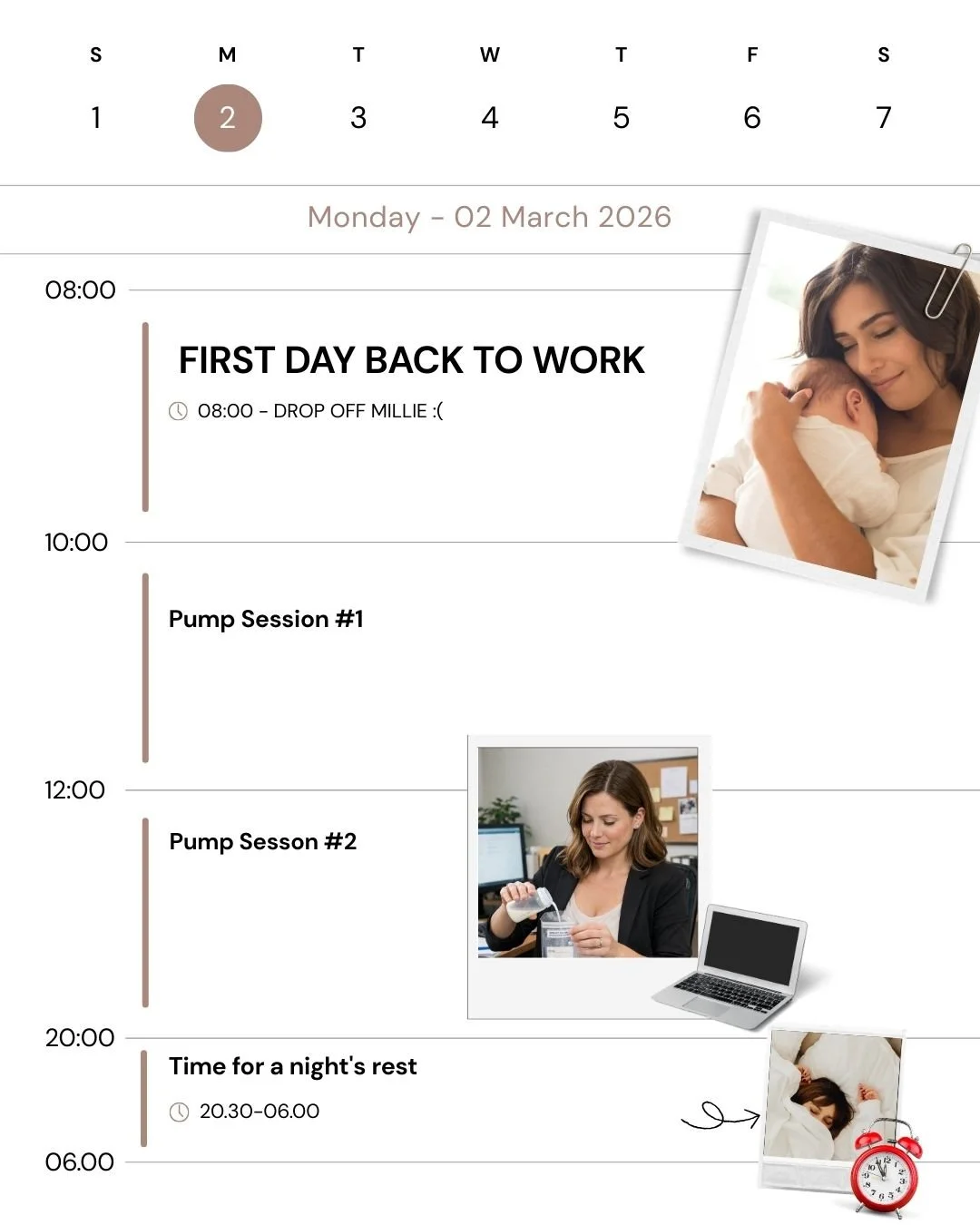
Step 4: Create a Realistic Morning + Evening Flow
Breastfeeding after returning to work often looks like:
Nurse before work
Pump during work
Nurse in the evening
Nurse overnight
Evening cluster feeding is common and normal.
Your baby may want extra closeness after separation.
This does not mean low supply.
Step 5: Prepare Logistically Before Your First Week Back
Preparation lowers anxiety.
Your “Back to Work Pump Kit” Checklist:
Efficient breast pump with correct flange sizing
Extra pump parts
Storage bottles or bags
Insulated cooler + ice packs
Nursing cover (if desired)
Extra shirt
Snacks + water
Photos + videos of your baby to help with let-downs
At home, prepare:
Pre-filled bottles for your baby
Extra 1oz bags just in case
Bottle washing plan
Plan if the baby appears hungry after a bottle
Instructions on how to warm or thaw breastmilk
When you feel prepared, your nervous system calms.
Step 6: Know Your Workplace Rights
In the United States, many workplaces are required to provide:
Reasonable break time to pump
A private space (not a bathroom)
Understanding your rights reduces stress before you even begin.
Step 7: Manage the Emotional Transition
Returning to work while breastfeeding isn’t just logistical.
It’s emotional.
You might feel:
Guilt
Anxiety
Sadness
Pressure to “do it all”
Fear your supply will drop
These feelings are normal.
Breastfeeding success is not about perfection.
It’s about sustainability.
Common Questions About Breastfeeding and Returning to Work
What if my supply drops?
Often, supply dips during this time are temporary and related to:
Stress
Ill-fitting flanges
Skipping pump sessions
Adding a short pump session in the evening before you go to bed can help boost supply. Consider also working with a lactation consultant to identify the cause.
Should I build a freezer stash before returning to work?
Yes, but you’ll only need:
1–2 work days worth (around 15-30oz should be plenty)
Oversupply can create pressure and unnecessary stress.
What if I don’t respond well to a pump?
Some moms benefit from:
Hands-on pumping
Pumping while looking at baby videos
Trying a different flange size
Switching pump models
A Sample Back-to-Work Breastfeeding Plan
Here’s what a balanced, sustainable plan might look like:
Morning:
Nurse before leaving
Workday:
Pump every 3 hours
Store milk safely
Hydrate and eat
Evening:
Nurse on demand
Optional short pump session before bed, especially if the supply feels low
Night:
Follow the baby’s cues and feed on demand
This should feel sustainable, flexible and simple.
When to Get Extra Support
Consider professional guidance if:
Pump output is not meeting baby’s needs
You experience repeated clogged ducts
Baby refuses bottles
You feel overwhelmed or panicked about feeding
You’re unsure how to create a schedule
Sometimes one consultation prevents weeks of stress.
You Don’t Have to Navigate This Alone
Breastfeeding while working is possible.
But doing it alone at 10:30 PM while assembling pump parts for the next day?
That’s not how mothers were meant to function.
If you want:
A clear pumping plan
Personalized schedule guidance
Bottle strategy support
Emotional reassurance
Real answers from a lactation professional
We created a live virtual class specifically for this transition:
Breastfeeding + Going Back to Work Virtual Class
You’ll walk away with a plan that fits your real life — not a Pinterest-perfect one.
Check dates for our next class →
Final Encouragement
Breastfeeding doesn’t have to end when work begins.
It just shifts.
With preparation, consistency, and the right support, many moms continue nursing long after returning to work.
You are not behind.
You are not failing.
You are building something sustainable.